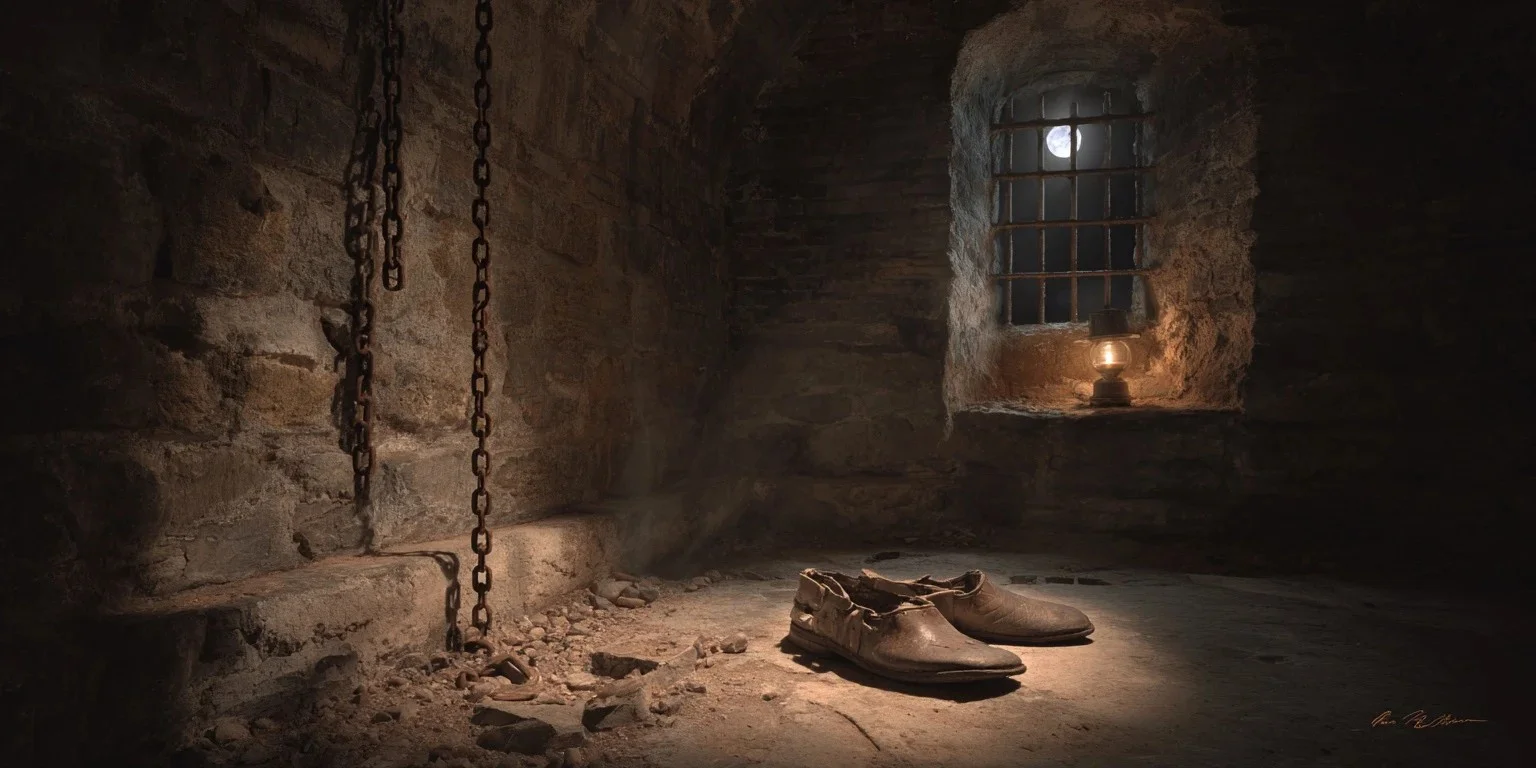
“When life gives you lemons…”
You’ve heard the saying. But let’s be real: when life gives you a lemon, it’s not easy.
I can think of so many setbacks in my life. You probably can too.
But here’s the thing: without setbacks, there’s no character. No discipline. Nothing to reach for.
Maybe you’re going through something hard right now. You made plans, but things turned out different. Let me encourage you: Just wait and see what God has planned for you.
Proverbs 16:9 says, “The heart of man plans his way, but the Lord establishes his steps.” We make plans, but God makes the path forward. And sometimes that path leads us through something hard… and to something better.
Proverbs 19:21 says, “Many are the plans in the mind of a man, but it is the purpose of the Lord that will stand.” We’ve got ideas, hopes, dreams… but (like it or not) God’s purpose is what counts more.
James 4:13-15 says, “Come now, you who say, ‘Today or tomorrow we will go into such and such a town…’ yet you do not know what tomorrow will bring. Instead you ought to say, ‘If the Lord wills, we will live and do this or that.’”
Planning isn’t wrong. Presuming is.
We’re called to plan with a humble heart, yielded to God’s will. Abiding in Him. And joyfully enduring… even when the details are unclear.
This is the beginning of a series titled “Joyful Endurance: Lessons from the Church at Philippi.” This won’t be a long series. The Book of Philippians is 4 short chapters, filled with wisdom and encouragement. But before we get to Chapter 1, we need to look at the backstory.
So today, we’ll begin with how Paul came to Philippi… and how that church was first planted.
Plans Eclipsed (verses 6-15)
In the previous chapter, Paul had plans to revisit all the churches from the first missionary journey with Barnabas… and that plan blew up.
Barnabas really wanted his cousin John Mark to rejoin them, after he had quit the first missionary journey in Acts 13:13. Kids. Whatta ya gonna do.
Paul said no. Barnabas said yes. The two had what Luke described as a “sharp disagreement.” So Barnabas went ahead with the reunion tour, and Paul went even further west, on a new route.
Paul initially had plans. But those plans didn’t work out.
By the end of chapter 15, Paul picked up Silas and Timothy. And now here, Luke (the author of the book of Acts) for the first time includes himself in the story. See Acts 16:10. Up to this point, Luke is only speaking in the third person. They, them, he, she. But here, for the first time, he becomes an eyewitness and a member of Paul’s team. Paul’s plans changed, but Paul’s team expanded.
After that, Paul tried to go south to Asia. The Holy Spirit said nope. Closed door. He tried to go north to Bithynia. Jesus said nope. Closed door.
Now he’s standing at the edge of the continent, staring at the sea in Troas. Now what?
Then what happens? Paul goes to sleep. How do you think he felt going to bed that night?
Discussion
- What’s your reaction when doors close? Do you feel disappointed? Confused? Relieved? Something else?
- Why do you think God sometimes says “no” to good plans? What might He be protecting us from, or preparing us for?
- What does Paul’s patience teach us about walking with the Spirit? How do we follow when the path forward isn’t obvious?
- How might Lydia’s response have encouraged Paul to keep going? (after all the delays, detours, and disappointment)
Key Takeaways
- God’s “no” is never the end of the story. It’s often the beginning of something better.
- Joyful endurance means trusting that every delay, detour and disappointment can still lead to God’s good purpose… if we’re willing to wait on Him.
Pain Endured (verses 16-24)
Discussion
- Why do you think casting out the spirit from the slave girl led to conflict instead of celebration? What does that tell us about how the gospel disrupts what the world profits from?
- Have you ever done what’s right, and suffered for it? How did you respond? What helped you hold on?
- What would it take to remain faithful, if faithfulness led to hardship rather than reward? Do we expect comfort, or challenges that will stretch and strengthen us?
- What do Paul and Silas show us about gospel courage in the face of injustice? How might their endurance strengthen your own?
Key Takeaways
- Joyful endurance means standing firm when faithfulness brings pain rather than praise.
- Paul and Silas didn’t suffer because they did something wrong. They suffered because they did something right. And they kept going.
- Our endurance is not passive. It’s a Spirit-led decision to stay faithful, even when the heat rises and it costs us our comfort.
People Evangelized (verses 25-40)
Discussion
- Why do you think Paul and Silas chose to sing instead of complain? What does that say about where their hope was anchored? What impact do you think their worship had on the other prisoners? What about the jailer?
- Why didn’t Paul and Silas escape when the doors flew open? What does that tell us about how they saw their mission?
- What does the jailer’s question reveal about what he saw in them? Can endurance be evangelism? What’s more powerful, a sermon? or a life of singing in the dark?
- What doors (literal or spiritual) might open in someone else’s life if you choose joy in hardship?
Key Takeaways
- Joyful endurance opens hearts that a sermon never could.
- When Paul and Silas chose to sing at midnight, instead of panic or escape, the jailer saw something different. And that night, his entire household was transformed.
- Joyful endurance isn’t just grinding it out. It’s about shining in a world that’s in the dark.
Something to Sit With
Let’s take a moment to look back at the path we just walked.
- Plans Eclipsed: Paul’s direction changed, but God’s purpose never wavered.
- Pain Endured: Obedience led to suffering, but they kept going.
- People Evangelized: Their worship in the dark became light for someone else.
That’s joyful endurance. It’s not about pretending everything’s fine. It’s about trusting God’s hand when the path makes no sense… and praising Him anyway.
So let me ask you:
- Where is God asking you to let go of your plan, and trust His?
- Where are you being called to endure… not just survive, but to shine?
- Who’s watching your life right now, waiting to see if joy really holds up under pressure?
Frequently Asked Questions
What is the Macedonian Call in Acts 16?
The Macedonian Call is the vision Paul received after the Holy Spirit blocked his plans to go to Asia and Bithynia. A man from Macedonia appeared in the vision, calling for help. Paul’s response brought the gospel into Europe for the first time, leading to the founding of the church in Philippi.
Who was Lydia in Acts 16?
Lydia was a dealer in purple goods from the city of Thyatira. She was already a worshiper of God when Paul met her at a riverside prayer gathering in Philippi. The Lord opened her heart to respond to Paul’s message.
She and her household were baptized, and she opened her home to Paul and the early believers. She is considered the first European convert.
Why were Paul and Silas arrested in Philippi?
Paul cast a spirit of divination out of a slave girl who was being exploited for profit. Her owners, furious at the loss of income, dragged Paul and Silas before the magistrates. They were beaten with rods and thrown into the inner prison without a trial.
What happened during the earthquake in the Philippian jail?
Around midnight, while Paul and Silas were praying and singing hymns, an earthquake shook the prison. Every door opened and every chain came loose. But no prisoner escaped. The jailer, assuming they had fled, was about to take his own life when Paul stopped him and assured him everyone was still there.
What is the significance of the Philippian jailer’s conversion?
The jailer’s conversion shows the power of joy under suffering. He witnessed Paul and Silas worshiping in chains and was so moved that he asked, “What must I do to be saved?” His entire household believed, was baptized, and rejoiced.
It demonstrates that faithful endurance in hardship can be the most powerful form of witness.
This lesson is part of the Joyful Endurance series.
Scripture quotations are from the ESV Bible (The Holy Bible, English Standard Version), copyright 2001 by Crossway.