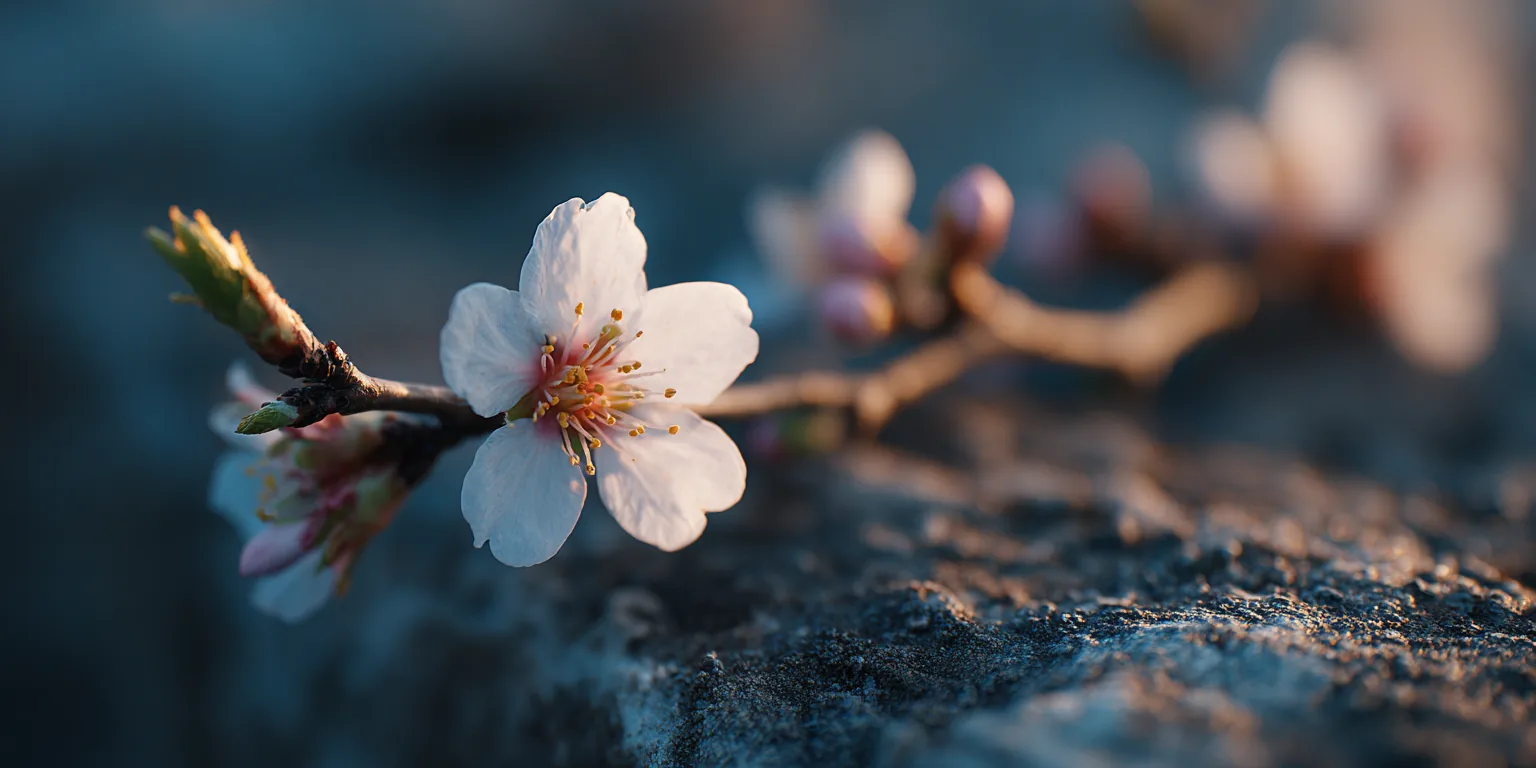
The seasons of our life, they change. Sometimes abruptly. Sometimes predictably.
But every 3 months, seasons change. And creation itself transforms before our very eyes.
The Scripture teaches this is God’s way of teaching us some things. Some things I want us to explore, on this Easter Sunday.
Summer Fruit
Look outside. The grass is green again. Flowers are pushing through. Trees are waking up.
Every spring, creation does what it was made to do. It bears fruit.
And that’s not an accident. The very first thing God said to what he made? Genesis 1:28. “Be fruitful.”
Before the fall. Before sin. Before anything went wrong. The first command. Be fruitful.
Now look at John 15. Jesus says, “I am the true vine, and my Father is the vinedresser.”
That word in the Greek. Geōrgos. Earth-worker. Farmer.
The Father is a farmer. Hands in the dirt. Planting. Pruning. Tending.
And what does the farmer want? Fruit. “Whoever abides in me and I in him, he it is that bears much fruit.”
The fruit isn’t something you manufacture. It flows from connection. Abide in the vine, you bear fruit. Cut yourself off, you wither.
That’s how vines work. That’s how we work.
And look at what the fruit looks like. Galatians 5. Love. Joy. Peace. Patience. Kindness. Goodness. Faithfulness. Gentleness. Self-control.
That’s summer fruit. That’s what grows when you stay connected to the vine.
But here’s what gets me. Verse 16. “You did not choose me, but I chose you and appointed you that you should go and bear fruit and that your fruit should abide.”
He chose you. He planted you. He appointed you to bear fruit that lasts.
Hosea 14:8. God speaking. “From me comes your fruit.” Not from your effort. Not from your hustle. From him.
Fruit is organic. It just comes naturally.
As children of God, and fellow heirs with Christ, then we ought to focus more on our character than on our achievements.
Be more. Do less. And the fruit will come.
Discussion
- Jesus ties fruit to abiding, not effort. What’s the difference between the two, and which have you been living on?
- The Father is the vinedresser, hands in the soil. Where do you see Him tending your life right now, even when it feels like pruning?
Key Takeaways
- The Father is a farmer. He planted you. He tends you. He’s not distant. He’s working the soil of your life.
- Fruit flows from connection, not effort. Abide in the vine. The fruit comes. Apart from him, nothing.
- You were chosen to bear fruit that lasts. Genesis to John, the call is the same. Be fruitful… ripened by the summer sun.
Autumn Seed
But summer doesn’t last. The days get shorter. The leaves begin to turn.
And that fruit that ripened in the sun of summer? It carries seed to the soil.
The seed from our fruit is meant to be scattered. It’s meant to be cast beyond where its planted.
We call it fall. Things fall. Leaves. Fruit. Seed.
But falling isn’t failing. It’s releasing.
Look at Mark 4. A man scatters seed on the ground. He sleeps. He rises. Night and day. And the seed sprouts and grows.
Who knows how. We don’t understand it. We don’t control it. We just trust the ground.
The earth produces by itself. First the blade. Then the ear. Then the full grain.
That’s the kingdom of God, Jesus says. Not forced. Not rushed. Not manufactured. Scattered. And trusted.
Then Matthew 13. The mustard seed. The smallest of all seeds. You could lose it between your fingers.
But sown in the ground, it becomes the largest plant in the garden. Large enough for birds to nest in its branches.
That’s what God does with something small. Something you almost overlooked. Something you almost held back.
Autumn is the season of the open hand. You’ve received the fruit of summer. Now release it. Scatter it. Share it. Cast it.
2 Corinthians 9. “Whoever sows bountifully will also reap bountifully.” God supplies the seed. You do the scattering.
You don’t get to choose where it lands. You don’t get to control what grows. You just open your hand and let it go.
Discussion
- Autumn is the open hand. You scatter the seed, but you don’t choose where it lands. What has God given you to release that you’re still holding closed?
- “God does His biggest work with the smallest seed.” What small thing have you been tempted to hold back or overlook?
Key Takeaways
- Falling isn’t failing. It’s releasing. Autumn teaches us to let go. The seed has to leave the hand.
- You don’t have to understand how it grows. Some plant. Others water. But the Lord of the harvest gives the increase.
- God does his biggest work with the smallest seed. Even if it’s small, share what you got. Scatter it and watch what happens.
Winter Sleep
But seeds that fall don’t sprout right away. They get buried. Covered. And for a season, that seed might seem to have gone to waste once winter arrives.
Winter is cold. The ground is hard. The trees are bare. Nothing is growing. Nothing is blooming. Everything looks dead.
And if you’ve ever walked through a season like that, you know the feeling. Loss. Silence. Waiting.
We’ve all been there. We say goodbye to people we love. And we weep.
Jesus says it plainly in John 12:24. “Unless a grain of wheat falls into the earth and dies, it remains alone; but if it dies, it bears much fruit.”
Every seed has to die before it can emerge from the ground. That’s not a metaphor for trying harder. That’s death.
Paul says the same thing in 1 Corinthians 15. “What you sow does not come to life unless it dies.” And what you sow is not the body that is to be. It’s a bare kernel.
Stripped down. Nothing to look at. Just a seed in cold ground.
Romans 6:3. “All of us who have been baptized into Christ Jesus were baptized into his death. We were buried therefore with him.”
Buried. That’s where Jesus was on Saturday. In a tomb. In a garden. Buried.
And the disciples didn’t know Easter morning was coming. They sat in the silence. They sat in the winter.
But here’s what winter teaches us. Death is not the end. It’s the ground.
1 Thessalonians 4:13. “We do not grieve as others do, who have no hope.”
We still grieve. The tears are real. But they aren’t the final word.
Discussion
- The disciples sat in the silence of Saturday, not knowing Sunday was coming. Have you known a season like that?
- Paul says we grieve, but not as those without hope (1 Thessalonians 4:13). What would it look like to hold both at once, real grief and real hope?
Key Takeaways
- Death is not the end. It’s the ground. The seed isn’t gone. It’s planted.
- We grieve. But not without hope. The tears are real. But they’re not the final word.
- Winter is quiet. But it’s not empty. Something is happening beneath the surface where no one can see.
Spring Rebirth
Read 1 Corinthians 15:20-23 (ESV)
But then… something shifts. The air warms. The ground softens. And what was buried begins to push through.
But then… Easter morning came. The stone was rolled away. The tomb was empty. And everything changed.
Paul says it in 1 Corinthians 15. “Christ has been raised from the dead, the firstfruits of those who have fallen asleep.”
Firstfruits. That’s a harvest word. The first thing that pushes through the ground after a long winter. Jesus is the first blossom.
And if the firstfruits have come, the rest of the harvest is on its way. “For as in Adam all die, so also in Christ shall all be made alive.”
And then Paul circles back to the seed. Remember the bare kernel from Winter? Stripped down. Nothing to look at. Buried in cold ground.
Here’s what it becomes. “What is sown is perishable; what is raised is imperishable. It is sown in dishonor; it is raised in glory. It is sown in weakness; it is raised in power.”
Same seed. Different body. What went into the ground is not what comes out. That’s resurrection.
John 11. Jesus standing in front of a tomb. His friend Lazarus is dead.
And he says, “I am the resurrection and the life. Whoever believes in me, though he die, yet shall he live. And everyone who lives and believes in me shall never die.”
Then he asks one question. “Do you believe this?”
That’s the question. Not do you understand it. Not can you explain it. Do you believe this?
Mary went to the garden tomb that Sunday morning, weeping. She saw a man standing there and thought he was the gardener.
And he said one word. “Mary.”
And everything that was winter became spring. One word from Jesus and the whole season changes.
He died for us. Took the punishment we deserved. Was buried. And on the third day, he walked out of that tomb.
Not for himself. For you. For me. For all of us. So that each of us could walk out of our own winters.
Song of Solomon 2:11. “The winter is past. The rain is over and gone. The flowers appear on the earth. The time of singing has come.”
A blossom doesn’t just happen on demand. It needs soil. It needs water. So much water. And it needs time. There’s a whole process we never see.
You can’t rush it. You can’t fake it. You just trust the season.
Easter blossoms. It’s who we are in Him. It’s what we do by nature.
We are the Easter blossoms. Sown in weakness. Raised in power. Buried with him. Alive with him.
Ephesians 2. “Even when we were dead in our trespasses, God made us alive together with Christ.” You were dead. He made you alive.
That’s spring rebirth.
Discussion
- “What is sown perishable is raised imperishable.” Same seed, different body. Where do you most need to trust that what feels buried in you will come up changed?
- Jesus is the firstfruits, and the whole harvest follows (1 Corinthians 15:20-23). If His empty tomb is the promise of yours, what changes about the winter you are in now?
Key Takeaways
- What goes into the ground is not what comes out. Sown perishable. Raised imperishable. That’s the promise.
- Jesus is the firstfruits. The first blossom after a long winter. And the harvest is coming.
- We are the Easter blossoms. Buried with him. Alive with him. The winter is past. The time of singing has come.
Something to Sit With
Summer fruit. The Father is a farmer. He planted you. He tends you. Abide in him and the fruit will come.
Autumn seed. Open your hand. Scatter what you’ve been given. Trust the ground.
Winter sleep. The seed has to die. It’s cold. It’s quiet. But it’s not empty. Death is not the end. It’s the ground.
Spring rebirth. What was buried has come to life. Sown in weakness. Raised in power. We are the Easter blossoms.
So just sit with this for a moment.
- Where are you in the seasons right now? Summer, autumn, winter, or spring?
- What has God buried in your life that you thought was wasted?
- Who in your life needs to hear that the winter doesn’t last?
- Do you believe this?
Frequently Asked Questions
What does it mean to abide in the vine?
Abide is a plain word. It means stay. Remain. Not try harder, not perform, just stay joined to Jesus (John 15:4).
A branch doesn’t strain to make grapes. It stays connected to the vine, and the fruit comes. So abiding isn’t a mystical feeling you have to work up. It’s keeping His word in you and staying close, day after day (John 15:7).
“Whoever abides in me and I in him, he it is that bears much fruit” (John 15:5). Hear the pressure come off. Your job is not to produce. Your job is to remain. He grows the fruit.
How can I bear fruit when I feel dry?
Start with what Jesus does not say. He does not say try harder. He says abide (John 15:4).
Dryness is usually not a sign you need more effort. It’s a sign you’ve been running on your own and need to get back to the vine. “Apart from me you can do nothing” (John 15:5).
So when you feel dry, don’t reach for a longer to-do list. Reach for Him. Time in the word, time in prayer, honest time with the One who is life.
The fruit is not something you squeeze out. It’s what grows when you stay connected. Be more, do less, and the fruit will come.
What does “unless a grain of wheat falls and dies” mean?
Jesus was talking first about Himself (John 12:24). He was the grain of wheat. He fell into the earth, He died, and out of that death came a harvest no one could count.
But He meant it for us too. A seed clutched in your hand stays a single seed. Planted, buried, given up, it becomes more than it was.
So dying to yourself is not loss. It is the way into real life. The thing you’re most afraid to release may be the very thing God wants to multiply. Falling is not failing. It is releasing.
What does “firstfruits” mean in 1 Corinthians 15?
Firstfruits is a harvest word. In Israel the first of the crop was brought to God, and it carried a promise: more is coming (1 Corinthians 15:20).
So when Paul calls Jesus the firstfruits of those who have fallen asleep, he is saying the resurrection has already started. Jesus is the first blossom out of the ground. And where the firstfruits go, the harvest follows. “As in Adam all die, so also in Christ shall all be made alive” (1 Corinthians 15:22).
His empty tomb is not a one-off. It is a preview of yours.
How do I trust God in a winter season?
Winter is real. The silence, the waiting, the goodbyes you never wanted. Scripture does not tell you to pretend it’s spring. “We do not grieve as others do, who have no hope” (1 Thessalonians 4:13). Notice: we still grieve. The tears are real.
But the ground is not empty. A seed is doing its slow work where you cannot see it. God’s silence is not God’s absence.
So trust is not forcing a feeling. It is remembering He has kept every winter before this one, and He is keeping this one too. You cannot rush a blossom. Wait for the season.
Does God really use something as small as what I have to give?
Yes. That is the whole point of the seed. The mustard seed is so small you could lose it between your fingers, and it becomes the largest plant in the garden, big enough for birds to nest in (Matthew 13:31-32). God does His biggest work with the smallest seed.
So the small thing you’re tempted to hold back, the little you think won’t matter, is exactly what He asks you to scatter. You don’t control where it lands or how it grows (Mark 4:27). You open your hand. He does the growing.
Scripture quotations are from the ESV Bible (The Holy Bible, English Standard Version), copyright 2001 by Crossway.